Showing posts with label ninja. Show all posts

Sunday, 9 November 2014

ナルト/ Naruto (manga)

It finally ended. After fifteen years, and overstaying its welcome by at least eight, one of the pillars of anime and manga of the last few decades has come to an end. Shounen Jump has lost one of its more recognisable figureheads, and I no longer feel compelled to complain every week about a new chapter of rushed plotting or emotion-free battles between giant blob-creatures.

As I mentioned in my review of the pre-timeskip anime seriesNaruto is deeply unfashionable. But I will defend it to the ground. Of its fifteen years, I’ve been following it for twelve-ish. Twelve years of my life with these characters, at least once a week, and most times two. That’s pretty remarkable. A large chunk of the crowd at any anime crowd will have been learning to spell ‘cat’ when I started to read Naruto. So my perspective is a little different from the average, I guess.

That, I think, is why I’m keen to defend it. Or at least, what it was. Post-timeskip, Naruto was largely an emotionally flat, highly contrived, rather ugly series of battles between uninteresting men with an inflated sense of self-importance. But it wasn’t like that to begin with. Which is why, once again, I think that in a few years’ time it will be rehabilitated and remembered fondly – just as happened with Dragonball. When I first joined the anime fandom, Dragonball was hated for GT and the prolonged screaming matches of Dragonball Z. Now it’s largely adored, primarily on the strength of the first series and the early parts of Dragonball Z. I expect the same will happen with Naruto when its best parts come into focus again.

Because I maintain that early Naruto was genuinely good. It was about ninja kids who were weak but ingenious, and who had people ready to push them, challenge them and if need be, protect them. Back then, it was largely a school drama.

Naruto himself was an intentionally annoying brat, while Sasuke was uppity and smug. Yet both were likeable and oddly cute. What made Naruto huge was the quick succession of two story arcs that blended cuteness and silliness with genuine emotionally heavy-hitting moments: first, the battle against Zabuza and Haku, which brilliantly had the enemies be sympathetic thanks to their deep bond and also immediately pitted the kids against someone genuinely dangerous. Naruto had a lot to prove and did it well – even if it had to rely on the cheesy ‘he didn’t really die!’ moment. Kishimoto proved this wasn’t just a one-off by following up with the chuunin exam arc – first, with the compelling character of Gaara, who was tortured, antisocial and merciless. The idea that this was a world of incredibly powerful warriors was cemented, and Orochimaru was a genuine threat in the background. While there was a certain laziness to then going into a tournament arc, as so many series do, Kishimoto did these battles better than most, with almost all of the fights between low-level opponents being won thanks to some genuinely clever little trick. Itachi was an enigma, part of an organization that seemed genuinely threatening and cool (back then), and the summons of the sannin seemed like absurdly powerful, more or less exclusive talents.

It all fell apart around then. Big summons led to bigger and bigger ones, and then the use of tailed beast powers, ending up with dull fights between big blobs. There was a time skip and the characters were no longer underdogs. The tricks were no longer clever because the stakes had to constantly be upped. Naruto couldn’t get away with being annoying because he was adorable any more, and Sasuke just became annoying. Akatsuki were revealed to be largely ridiculous and could mostly be defeated by being made to realize their evil actions were – gasp! – evil. Itachi was given redemption, but not before being made to look completely ridiculous in what should have been a series highlight. The final battle with a very old man and some almost random summoned goddess woman was entirely without tension and the last clash of all, prefigured for fifteen years, was rushed into very unconvincingly, over very quickly and entirely without emotional weight.

Like so many shounen titles – particulary Dragonball and Reborn – as well as a fair number of Western kids’ stories (like Harry Potter), the big problem with Naruto is that it started fun, jokey and cute, then tried to take itself too seriously. It lost the balance and became largely tedious, and unable to have much emotional impact.


Thus, which the classic ‘see-them-as-adults-with-their-kids’ ending of Digimon and yes, Harry Potter had some small smiles in it, mostly for minor characters, I can’t say I’m sad to see this era come to a close. But I remember that Naruto was once great, and that’s the main thing I’ll always take from it.  

Wednesday, 28 November 2012

劇場版 NARUTOブラッド・プリズン/ Naruto Shippuuden movie 5: Blood Prison


During the climactic action scene that dominates the third act of this, the eighth film in the Naruto franchise, the cavalry arrives to help our loveable hero, evening what were until then impossible odds. Naruto is delighted and relieved, but takes a moment to reflect on the betrayal he felt. So wait, he ought to have said – you had me arrested, made to feel abandoned by those I loved, stripped naked and humiliated, beaten and put into the hands of those you knew were going to kill me, and who many, many times before you arrived could have done so if they got their act together instead of faffing about pretending to be a harsh prison regime, then allowed dozens and dozens of the prison’s inmates to die with no chance of miraculous resurrection – just so you could make a flashy entrance at this point? You had enough intel to send Naruto in blind and were mobilising a small army of ninja from two different villages, which meant any fears over a declaration of war were unavoidable once the invasion force landed anyway, yet you didn’t just dispense with the pointless deception and creeping around and just invade/send in a competent investigation force or inspector? Then stuck on a final scene just to highlight how this didn’t work?

Yes, I respect the Pierrot team for trying to make a Naruto film with a slightly different tone to it than usual, but this one was just poorly thought-through. On the surface it flows like a decent prison drama, but its twists are just poorly thought-through and full of holes. When a Naruto lookalike makes several assassination attempts, he becomes a wanted man – despite Naruto’s very first episode establishing that taking on the appearance of another is an incredibly basic skill. Naruto is locked up in a wooden box and carted off to a prison, where a fire jutsu seals his chakra and subjugates him. He is toldhis only hope of release is a request from his village, but none comes, and his spirit is broken with solitary confinement and strip-searches (not sure if that scene was supposed to be comic, with Japanese attitudes to nudity after all very different from Western ones, but personally I found it rather chilling). It soon becomes clear, however, that there is more to the prison, and a rumour of a box that grants any wish that the Raikage had been talking about in the opening scene just happens to tie in. A mysterious girl helps Naruto, with her flashback mentioning a jutsu that sacrifices her life marking her as deus ex machina material very early on, and he tries his best to escape the blood prison.

But then he is used as a sacrifice to awaken the (giant) box, which grants the bad guy’s wish – not for power, as his Ancient Spirits of Evil From Thundercats masters had expected, but for his dead son back. But the son has changed, and soon transforms into a huge ridiculous mind-reading monster, and it’s up to Naruto and co to stop its rampage.

There are very many questions – why did the actually-not-so-bad-guy wait so long before using Naruto for the purpose he was meant? Is the blame for the son’s new nature based on the evil of the box (in which case why is it shown as justified to kill him when he was finally depowered?), or his own grudges (in which case what was all that about him being corrupted, and why did Naruto’s speeches not fix him, as per usual?)? Were the rescue squad lurking there for days, or did they just happen to arrive when they did, and if so, what if Naruto was already dead, as he was very likely to be?

Of course, it doesn’t really benefit anyone to overthink a Naruto movie, which I have also said of previous films in the series. But I thought this might have been Naruto’s The Hell Verse, darker and more mature than the other films and much better for it – but of course The Hell Verse was made with the input of the mangaka, and that was not the case here (though on the strength of recent chapters that may not be such a bad thing). I think I’ll have to wait for the feature-length tie-in for HunterXHunter with input from Togashi himself for another Jump film that impresses me.

And the fact is that with the manga constantly drawing only cringes from me and the anime now dozens of episodes ahead of where I am, my enthusiasm for Naruto is all but gone. Much as it’s hated, I’m going to stick it out until the end, but it’s certainly a very long way from being a series I enjoy watching very week these days… 

Wednesday, 17 October 2012

バジリスク〜甲賀忍法帖〜 / Bajirisuku ~Kōga Ninpō Chō~ / Basilisk: The Kouga Ninja Scrolls


It’s been a long while now since I stared Basilisk, which was back when it started. I watched three new anime that day, and of them, Basilisk was my favourite: ‘the only one I’m particularly interested in following is Basilisk, a beautifully drawn (if rather 80s in character design) new series about a war between two ninja clans. Like Naruto taking itself seriously, this pseudo-historical drama has lots of blood, testosterone and refreshingly ugly characters, which I’m not a particular fan of but can accept if there’s good reason. The thing is, I’m not sure if it might take itself TOO seriously, and thus become a bit farcical and charmless. Still, I’m interested enough to find out the answer to this question, so I’ll keep watching.’

That was back on 6 May 2005, over seven years ago. I have indeed kept watching, but fantastically slowly. The more I watched Basilisk, the more I realised there was nothing bringing me back to it.

Basilisk is a historical fantasy based on the real-life Kouga and Iga ninja clans, who established much of the lore in Japanese culture regarding ninjutsu and played a significant role in the much-romanticised shougunate period. In a crisis of succession for the shouguns, it is decided that the two ninja clans will each represent one heir, breaking their uneasy truce to have their ten strongest fighters battle to the death in order to decide who will be the next shougun. Added to this is the Romeo and Juliet story of the two young ninja who are to be their future clan leaders – engaged in a romance that was meant to bring peace after generations of battle, but now doomed to fight.

Though there are still images that are beautiful, some impressive action and poetic stillness, and though the intro theme is one of the better ones Gonzo have used, the fact is that Basilisk is dull. It manages to avoid having a stereotypical shounen tournament in the MÄR vein, with one ninja clan getting a distinct advantage and making the most of it from the shadows rather than having fair fights, but that is only a slim veneer of complexity, and it soon becomes very tired stuff. The ninja are all basically given superpowers, but some of them are incredibly silly, like the big fat man made of rubber, a woman who has the natural ability to emit poisonous gas when close to orgasm and one whose super-strength is in his hair. There are cooler powers – slipping into walls, controlling minds with the eyes, the big bad having some sort of parasite that brings him back to life – but it’s all still very puerile and goofy.

And the 80s aesthetic brings with it other qualities, so that like Hundred Stories, I found it to represent some of the worst clichés of anime in the Western mind, which largely came from 80s fetishised titles marketed in the Occident as ‘adult’. There’s blood and gore by the bucketload, and whole episodes dedicated to quasi-erotic torture. There are hypersexualised women and rape scenes. And the story ends up irritatingly predictable, with a deathly slow pace that made me wish the season had only been 13 episodes. Sure, the series is based on an old novel from the 50s, but I bet the more juvenile themes are either added or exaggerated here.

Stylish and memorable, certainly, but in execution dull and turgid. 

Wednesday, 4 April 2012

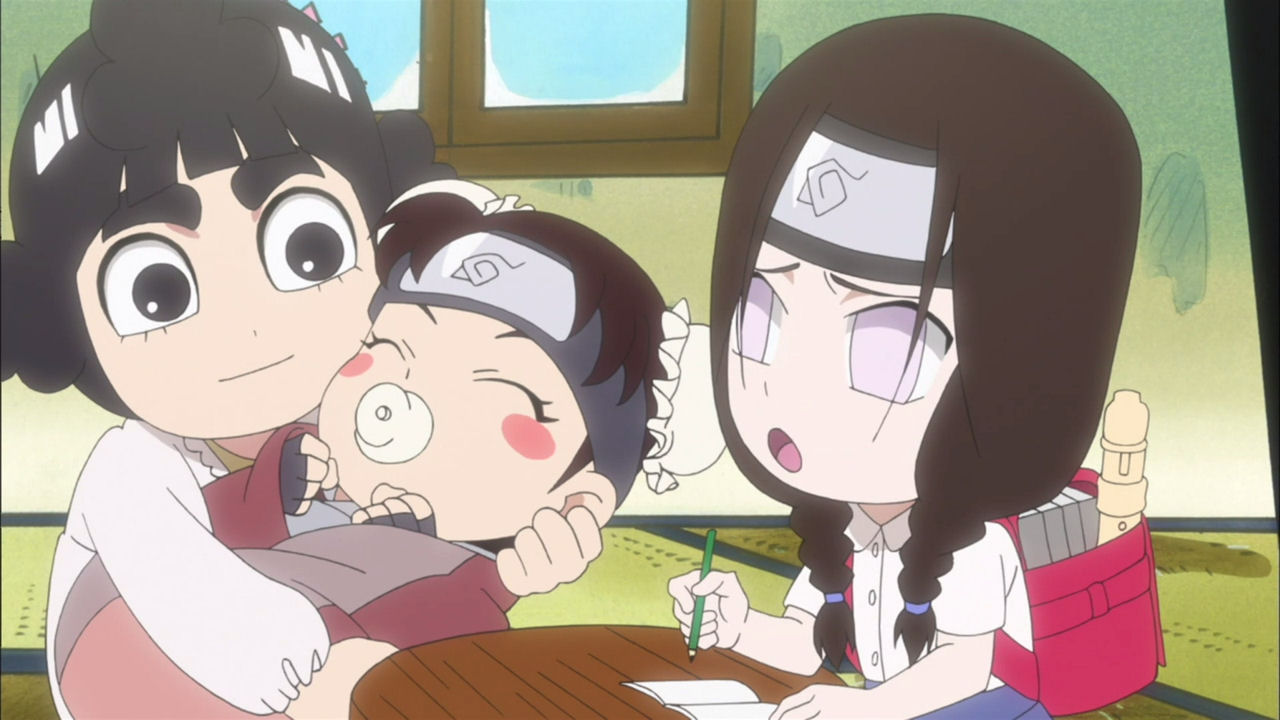
ロック・リーの青春フルパワー忍伝/Rock Lee no Seishun Full-power Ninden/Rock Lee’s Springtime of Youth Full-Power Ninja Training


First Impressions

So, episode 1 of Rock Lee’s Springtime of Youth aired in the now-vacated Bleach timeslot. So Studio Pierrot are now animating two different Naruto anime, with the voice actors featuring in both. And…I can’t say I find it a bad idea. Where the Naruto manga has long been a disappointing trudge of stupid twists and dull fights between giant blobby creatures, the SD comedy based on Rock Lee that emerged as the best of the comics in the Saikyou Jump spin-off to Shounen Jump was a breath of fresh air. Even as professional fanfic. And Tenten shone as she never shone before as the comedy straightman.

I was a little surprised it was to be a weekly anime – I had expected it to get truncated and appended to the end of Naruto Shippuden episodes like Bleach’s Shinigami Zukan, maybe getting half-hour specials for Jump Festas or DVD releases or some such. This way may actually be the better business decision, as it’s compulsively watchable – but I’m not sure if it will make for quite such a funny show.

This first episode was a bit of a mixed bag. It expanded the first part of the first chapter into a mini-plot about saving a girl from debt sharks, and while the new enemies were funnier than the throwaway one in the manga, the jokes about dog turds got very laboured very fast and the pacing just wasn’t as funny. The second half, on the other hand, was an improvement on the original, other than the timing and reactions to Lee’s attempts to do Sexy and Harem no Jutsus being off. Lee’s little play about having to raise his young daughters was a great addition and made me like the episode overall rather more: I was doubting the writers’ abilities to come up with gags as funny and sparky as those in the manga, but that made me think that they can riff on basic ideas well.

I doubt it will be as funny or clever as the manga, but I quite like that the strips are being expanded – having a joke repeated in anime form is never likely to offer much that’s new, but if Pierrot continue to put their own spin on Rock Lee’s Springtime of Youth, it could be a great companion piece to expand what’s in the manga rather than replacing or emulating.  

Saturday, 7 January 2012

少年猿飛佐助 / Shounen Sarutobi Sasuke / Boy Sarutobi Sasuke / Magic Boy

Released in Japan in the last few days of 1959, this is the oldest anime I have yet watched. It was Toei’s second animated feature film, after Hakujaden, and as far as I can tell only the third animated feature film Japan ever produced, the first being 1945’s black-and-white Momotarou, which today is looked at slightly askance for being made under a regime after all allied to Nazi Germany. This film and Hakujaden were released about three months apart from one another in the US, the first of a slew of Toei films to be released in the States, until 1966 and Gulliver’s Space Travels made it clear that the idea wasn’t working – so American kids missed the period where Toei’s films actually got really good, for example with Puss ‘n Boots.

I can see why the release of this film was unspectacular. Having to work from the (reasonable) premise that American kids in the 50s didn’t really know what ninjutsu was, MGM tried to make everything more universal – ninja arts became generic magic, the idea of ninjas isn’t raised at all and there’s no attempt to convey that Sarutobi Sasuke is a legendary figure in Japan not too far removed from Robin Hood in the English-speaking world, thus already familiar to the audience. What comes over – from what I’ve seen of the dub – is something quite awkward and unwieldy, like a drab Peter Pan vs a witch story.

And the fact is that this is a very, very difficult film to attempt to detach from its Japanese origins, because beyond the opening scenes – which are by far the worst thing about the film – it is very, very Japanese.

It’s the opening that gets the film its reputation as derivative of Disney. This is true, but not to the extent many critics would have you believe, especially as I suspect many of those watched the dub, which introduces more songs. Young Sarutobi Sasuke lives in the forest with his big sister, making friends with all the animals of the forest (who speak in annoying baby-talk) and – appropriately, given that his name means ‘Monkey Jump’ – swinging through trees with monkeys. Amongst these animal friends is Bambi…no wait, Eri, who is very much a Bambi rip-off. When Eri gets in trouble with a hawk and ends up in a lake, he is attacked by a mysterious salamander. Sarutobi and the little deer’s mother save him, but at the cost of the latter’s life, though there thankfully the Bambi derivations end. The salamander just then decides to reveal itself to be a powerful evil spirit, a hideous woman in the oni/yama-uba/hone-onna tradition. To fight her, Sasuke realises he must learn ninjutsu. After a rather confused encounter with some bandits and the demon, Sasuke stumbles across the sennin/hermit Tozawa Hakuun (Presumably a descendant of Tozawa Hakunsai) who can teach him the ways of the ninja. Along with his sister, their animal friends, a little girl the bandits almost didn’t have the heart to kill and historical feudal lord Sanada Yukimura (played by a young Nakamura Katsuo, who would have a distinguished acting career and return to voice acting after several decades for Steamboy), Sasuke returns after three years to put an end to the demon – who hasn’t honestly done very much harm in that time.

The main problems with this film are its mixed animation quality and its pacing. Sometimes there is such fluidity in the animation that it rivals the Disney it aspires to emulate – two scenes in particular are remarkable: one of the demon doing a geisha-style dance that’s very obviously traced from live-action in the Snow White tradition, but another where Sasuke climbs up a mountain that I’m not sure could have been done that way. This latter scene is the only time there’s believable weight behind the boy’s movements, and a lot of reason the animation looks poor near the start is that characters sort of float, and if they fall, they never seem heavy at all. The art is very mixed, the characters constantly going off-model and some jarring filtered photographs used for the backgrounds. But this was a studio in its infancy (including being Rintaro’s second anime job), and the weightlessness becomes acceptable once Sasuke can fly and shoot fireballs and walk on water.

Overall, a piece of animation history well worth seeing, with occasional bursts of charm, style and technical excellence, tempered by a lot of problems. I’d avoid the dub, too: it’s a liberal adaptation that freely changes names and even events – at the end of the film, for example, the dub and my subtitles both had Sasuke agreeing to enter Yukimura’s service, but what he actually says is that he’s just a kid, and goes skipping off. Not Toei’s best, nor genre-defining, but well worth the watch.

Friday, 23 December 2011

Naruto movie 3: 大興奮!みかづき島のアニマル騒動だってばよ! / Dai Kōfun! Mikazuki-jima no Animaru Panikku Dattebayo!/ Great Excitement!Animal Panic of Crescent Moon Island

English title: Guardians of the Crescent Moon Kingdom

Much like the previous two films in the Naruto series, this one sets up a promising premise, adds very nice animation and well-integrated CG to what is already one of Naruto’s greatest strengths - character design – and then soon grinds down into very formulaic, cheesy silliness. The spoilt-younger-kid-gets-taught-valuable-life-lessons-by-the-protagonist basis so popular in Naruto and One Piece is not a bad template, but it needs a strong overall plot to compliment it.

Team 7 (with Rock Lee replacing Sasuke) are on a mission to escort a fat prince reminiscent of Kurata from Hikaru no Go back to his hometown – though not before stopping to buy an entire circus. The prince’s son Hikaru is also in the retinue, his design (as well as that of a very senbon-zakura-like attack later) lifted more or less directly from Bleach – he could easily be a younger Quincy. Naruto clashes with the boy, of course, until our young protagonist finally loses his tempter, hits the boy and gives him a lecture – actually getting surprisingly abusive. Young Hikaru is stung enough that he is moved to prove his mettle during a storm – he goes to rescue his favourite animals. Of course, most people would consider an 8-year-old (or thereabouts) going out onto the deck of a boat is listing so badly that he could be thrown overboard at any moment and letting tigers out of cages incredibly stupid, but it wins the respect of Naruto and co. Far worse, it also makes Chamu the Siberian Tiger (in a world with no Siberia – or indeed Amur) and Kiki the monkey become friendly and seemingly fluent in human speech. The prince gets home to find there has been a coup, so of course lots of one-on-one ninja battles ensue, accompanied by long speeches and kids proving themselves both brave and capable in the usual manner.

Not as good as either of the last movies, thanks to the added cringe-factor of circuses and animals, but with some nice scenes early on and some great bits of animation, it was worth seeing, and certainly much better than the filler in the series. You didn’t really need any knowledge of the Naruto universe to understand what was going on, so it stood alone well. It just seems a shame that it’s been a while since I’ve expected anything Naruto-related to do anything but play it very safe, in terms of plot, obvious distinction between good guys and bad guys and acceptable modes of minor-character deaths.

There’s something interesting, though, about how compelling it is for young fans of the show to see their hero, though his self-cloning techniques, get killed again and again and again before he finally prevails…

(expanded from impressions, 3.5.07)

Tuesday, 23 August 2011

劇場版 NARUTO 大活劇! 雪姫忍法帖だってばよ!! / Gekijōban Naruto Daikatsugeki! Yukihime Ninpōchō dattebayo!! / Naruto Movie 1: The Snow Princess’s Book of Ninja Arts

This, the first Naruto film, is also the only one to date that I saw on a big screen. I saw it first as a fansub in 2005, but then caught it again in 2007 when there was a single promotional screening in London. That may well mean that it is the one and only Naruto film I’ve watched through twice. By 2007 Naruto was already losing its lustre as a series, though had nothing like the blind hatred it gets today, but in 2005 I was quite genuinely keen on the series, before filler made it a laughing stock and the post-timeskip manga storyline even put off the long-term fans.

There were worse ones I could have suffered through. I quite liked this movie adaptation, if truth be told. Because, as I wrote on May 02, 2005, it really made me giggle.

‘I really enjoyed it!’ I went on. ‘No, it was nothing like as good as the early chapters of the manga, and had a very trite story, but that was alright. Team Seven have never been so beautifully drawn and animated, Naruto himself has rarely been so hilarious and some of the shorter fight scenes were very satisfying. The story was merely functional, with barely a new idea throughout, but on occasion, it's fun to watch something brainless - especially if you know and like the characters already. The context (movie stars, machines) was so different from the kind of thing Kishimoto writes that it felt like another series altogether – and we also got a USEFUL Sakura, which was just bizarre, but very welcome!

I found it to be a lot of fun. Not the best movie ever made, but certainly enjoyable, and I'd watch it again quite happily.’

Those impressions have not changed, really. Naruto had a great cast in 2005 and some really fun ideas. Those who pour vitriol on it today likely never experienced the exuberant fun of it when we didn’t know what a state it was going to end up in. Back then, the aesthetic could still be stunning, the associated talent still remarkable (director Okamura Tensai coming fresh from working on Wolf’s Rain) and the end result still pleasing. Fond memories here, and I don’t care who disapproves.

(the English title is Naruto the Movie: Ninja Clash in the Land of Snow)

Monday, 1 August 2011

劇場版NARUTO−ナルト− 疾風伝 / Gekijouban Naruto Shippuuden / Naruto Shippuden the Movie

This, the first Naruto Shippuden feature film, was typical Naruto movie fare, with some nice fights that would’ve been so much nicer if the baddies’ designs weren’t such a load of crap, a tsundere who gradually comes over to Naruto’s way of thinking, and a really daft climactic fight – oh, and an incredible artificial opening crisis featuring bad CG soldiers who march halfway to Konoha and then just decide to go back home after all.

For its flaws, though, Lee fighting with the gates open and drunk was pretty hilariously awesome, and I have to say that Neji appearing with his divination ready is quite spectacular – even if the enemies turned out to be total pushovers. I’d’ve been unimpressed, paying to see this in a cinema, but when it’s essentially an extended filler episode with some rather nice little bits of animation, as it is for me, it was worthwhile.

The plotline is simplistic but quite neatly-told. When a sealed demon is unleashed, only one person can banish him again, a wilful priestess called Shion. Shion can see visions of the future, and upon meeting Naruto proclaims him about to die - something that probably would have meant more tension if not for the impossibility of such a movie as this, screened during the programme's main run and not written by the original author, killing off the main character. He argues he can change his fate and of course eventually proves it - but only once Shion has learned valuable lessons about herself, a little too late to save the people she's sacrificed.

It's flawed, but a little more ambitious and successful than the other Shippuden movies, and nice on the eyes, too. The fact that it ended on a sex joke was a bit of a surprise, but I have to say that it made me laugh.

(expanded from impressions, 3.5.08)

Wednesday, 6 July 2011

劇場版 NARUTO-ナルト-疾風伝 ザ・ロストタワー / Naruto Shippuden Movie 4: The Lost Tower

After the disappointing Bonds and the downright terrible Inheritors of the Will of Fire, I was uncertain that it was ever again going to be worth watching a Naruto feature film. They’ve never been good pieces of animated storytelling, the worst kind of cash-in to milk a popular franchise, but they were at one stage fun, being silly, straightforward stories that usually gave a chance to see the characters with superior art and animation. Lately the films have lacked even that much.

So I’m quite happy that The Lost Tower was a return to form, however much that may sound like damning with faint praise. It was not high art, or daring or a highlight for the few fans who are sticking with Naruto to the bitter end through dogged loyalty to the manga and original series, but it was entertaining, solid and had a few great ideas.

Naruto and the new Team 7 – that is, with Yamato and Sai – are tracking a rogue ninja to the ruins of a city that was once great, but only a couple of decades earlier had fallen to ruin. Their target, however, is in the midst of a plan to travel back to the glory days of the metropolis and make use of a great power source. Of course, Naruto gets pulled into the time vortex that is created and finds himself in the city twenty years before. The rogue ninja, Mukade, was sent back several years earlier than this, and has by now established himself as the political leader of the city, using the vulnerable young princess as a puppet. Naruto foils an assassination attempt on her life, and so gets pulled into the intrigues Mukade has set up, as well as finding himself in the company of other Konoha ninja from the past.

The story unfolds with a simplicity beyond even most Shounen Jump movies: before the halfway point, the major battle with the antagonist has begun and the exact aims of the characters are established. This leaves a lot of room for the rest of the film to be thrilling battles, rescues and inspirational speeches – the bread and butter of this sort of anime. While maybe a little more sophistication would not have gone amiss, there is much to be said for the direct option, and it works nicely.

And once again it looks great. Pierrot are capable of producing high-quality stuff when they work hard: let us not forget that their KumoKaze is often mistaken for a Ghibli production, and not just for the character design. This isn’t stunningly beautiful, but it certainly stands above the other recent Naruto films and the state of the weekly anime. There is some superb fluid animation here, in speech as much as in the action, the CG is nicely integrated and there are actually nice attempts at introducing Dutch angles and other less conventional mise-en-scene techniques to make the visuals interesting.

And dubious though I was at the start, the idea of going back in time twenty years provides some great moments. I loved that for some reason, Minato’s teammates on this mission were Chouji’s dad Chouza and Shino’s dad Shibi, as well as mini-Kakashi. It was great seeing them in action. The idea of having Naruto and Minato interacting provided some problems for continuity and some contrivance to work, but it turns out to be just about worth it, and while the inevitable closing scenes where the events get squeezed out of the canon continuity are a necessary evil but still grate somewhat.

But these are the pitfalls of making a Naruto film. And as they go, this one isn’t bad at all.

Saturday, 18 June 2011

Naruto Movie 2: 大激突!幻の地底遺跡だってばよ / Daigekitotsu! Maboroshi no Chiteiiseki dattebayo / Great Clash! Illusionary Ruins at the Depths of the Earth ...

...dattebayo. Or to give it the official English title, Legend of the Stone of Gelel.

It must be said that with the regular series rapidly losing fans thanks to terribly-written filler episodes, the manga limping along with a predictable and clunky plot and big reveals that are milked way to much to provide anything but bathos, and the games fun to play but hung on repetitive and somewhat silly plots, Naruto is long past its heyday. However, this movie reminded me just how good the characters are, and just how gripping their world can be. It was almost a good movie. Almost.

Firstly, the movie is beautiful. Animation has priority over keeping the art totally on-model, but it works well, because the characters move with such fluidity and the art is still of a high enough quality that it looks fantastic. The background work in particular is superb, though some CG backdrops were a little jarring. Naruto as a series began with extremely beautiful animation in its first main arc, became a bit hit-and-miss thereafter (from the highs of the Lee-Gaara fight, still two of the most impressive episodes of any anime I’ve seen, to the lows of the Naruto-Kiba fight) and currently suffers from some of the cheapest and most basic animation since Pokémon. But the animation here was superb, recalling at times Miyazaki films (the little slice-of-life cuts in the gypsy camp; trees growing at an incredible rate), at times Akira (Kankuro’s face in the shadows; the way Gaara’s sand moved), and showed just how good the characters can look when animated properly. I assure you, that is very good indeed!

Kudos to the writers for creating something that serves both Naruto newbies, who would find little confusing (except a little Sasuke cameo and perhaps the lack of exposition for Gaara and Kankuro), and also hardcore fans. The scenario wasn’t written by Kishimoto (the manga's creator), but it’s clear that the scriptwriters knew their stuff, from accurate characterisation and catchphrases and good portrayals of characters’ fighting styles to typical plot tropes. There was even good use of genjutsu, which it sometimes feels like Kishimoto himself has abandoned or forgotten (Itachi’s special form of it aside). The only questionable part is that there are people in the fictional world who haven’t heard of Chakra or ninjutsu. This seems unlikely within Kishimoto’s universe, though it’s not impossible.

But the crux is the story. And it starts so well! Naruto, Sakura and Shikamaru’s simple mission becomes diverted when they are attacked (for reasons never fully explained) by a mysterious knight. Nice to see some varied cultures. The young knight is following a man who is promising to build a utopia where all are safe from war. But at what cost?

Very typical anime stuff, but well done. Surprisingly, what lets this movie down is the fights, especially troublesome since the big plot McGuffin means that 90% of the movie’s latter half is fighting. It’s not the animation – there’s little to fault in the opening scene, for example – but the writing. First, there are some daft One Piece moments (‘Your sand can’t compete with my lightning!’), except the film doesn’t have the tongue-in-cheek charm of that series to carry it off. But what’s really hard to take is the fact that the bad guys keep mutating into really stupid-looking mutant creatures. It just does not work. It takes the whole thing down a level and makes it laughable. If not for this major flaw, the contrived plot, cheesy ending and paper-thin big bad guy would have been palatable. But the monsters push this one step too far; it becomes irretrievably ridiculous. Shame – the first half really was exemplary.

(originally written 23.5.06)

Wednesday, 8 June 2011

劇場版 NARUTO−ナルト− 疾風伝 絆 / Gekijouban Naruto Shippuuden: Kizuna / Naruto Shippuuden movie 2: Bonds

My standards for Naruto theatrical films really aren’t very high. The previous movies have generally followed the same rough formula: introduce a random youngster for Naruto to introduce to the glories of shounen philosophy (be loyal and brave and help those in front of you with your fists! It will work out in the end because you have a character shield!), defeat a baddie with a little help from your friends, and strike lots of poses and make pat, adorable little speeches. Usually good, forgettable fun, with the added draw of having artwork and animation of a much higher quality than is possible in a weekly series.

Despite being the highest-grossing and possibly most heavily-marketed of the Naruto movies, Bonds is the one I have enjoyed the least, in large part because it simply doesn’t have the eye-candy appeal. It’s not nice to look at, and the animation standard looks barely any better than the average episode of the series, and certainly nowhere close to it at its best, let alone previous movies. Parts of this theatrical, mainstream release quite simply look bad, especially close-ups. The direction is horribly lazy and large parts of the budget have clearly gone on ugly, poorly-integrated CG.

The story is pretty poor, but that’s an allowance I make for Naruto movies – although there have certainly been better ones that this, even taking into account the numerous silly baddies of the other five films. It’s a flimsy plot involving a mysterious clan of airborne ninja out for revenge, an infamous doctor and his young disciple, a sweet young tomboy. To give the film a gimmick, Sasuke has appearances tacked on, which serves more or less only to drive home how separate from canon these stories are, as his interaction with Naruto and Hinata will of course be ignored in the rest of the series, and the poor random-youngster-of-the-film doesn’t even get a scene explaining where she’s going to vanish off to after the end.

On top of that, there’s a rather creepy message here, glorifying the somewhat erotic bond of a pupil hero-worshipping their teacher. The closer to obsession it is, the better, it would seem. Presumably the idea is to hark back to the Zabuza/Haku glory days, when Naruto was actually good, but here it just comes across as unsettling, and trying to shoehorn Naruto into having that attitude towards his mentors didn’t work at all. There’s a line between appreciating, admiring and relying on a teacher and worshipping and loving them…

A Naruto movie isn’t meant to be a great work of art, or clever, or innovative, but it’s at least supposed to present familiar characters in a way that’s nice on the eyes. Just that would be enough for this to pass. As it is…it’s not only careless and silly, but ugly too! Worst Naruto film of them all.

(Originally written 7.7.09)

Tuesday, 31 May 2011

ナルト / Naruto (pre-timeskip)


Naruto has become the series everybody loves to hate. Well, Dragonball Z once held that position, until it was rehabilitated by nostalgia, and I feel quite confident that Naruto will eventually go through same treatment, once people forget about the debacle of a year’s filler episodes and the mess of Shippuden, or at least can balance it against the excellent first few years. Because Naruto started out very, very good and only became a laughing stock much later.

I heard of Naruto before it was big. I don’t want to sound hip or smug about this – it’s simply true. In 2002-3 I would check Toriyamaworld.com daily for their translations of Hikaru no Go and HunterXHunter. The site was a real hub of the anime community back then, far smaller than it is now. And they not only scanslated but provided anime subtitles for Naruto, then not long out of its first plot arc. I remember that all the character biographies on the site were from the Haku/Zabuza arc long after it ended. I resisted it for some time, not liking the first episode much, but eventually watched more. By the time the chuunin exam arc began, I was hooked, and I don’t care how reviled the series has now become: I have a great affection for the characters, the mood Kishimoto spun and the degree of clever foreshadowing he once had.

And thus, here are my thoughts on the series from way back in mid-April 2005: ‘High time I got around to talking about one of my favourite anime: Naruto. Now well past its hundredth episode, Naruto is one of the most successful anime in Japan, and (if the dub doesn’t butcher it, which it almost certainly will), may yet capture the imaginations of western children. Deeply indebted to Toriyama Akira and his Dragonball Z, Naruto spends a lot of time building up to a fight, a little while on the fight itself, and then another lengthy spell explaining the fight, or showing its deeper emotional conflict through flashbacks. However, at its best, it transcends this derivative format and gives real emotional depth to its characters.

It has some dreadfully cheesy moments, and animation standards have fallen considerably since the beginning, but because nothing can touch it when it’s at its best, I rank it higher than the more consistent but never quite as brilliant One Piece. The story revolves around a young boy, Uzumaki Naruto. Sealed inside Naruto’s body is the spirit of a powerful demon that almost destroyed his village, and because of this, he was ostracised. Nevertheless, he finds companionship and competition when he is put in a team with Haruno Sakura and Uchiha Sasuke, the latter of whom is a tortured and aloof boy, the last of his clan. Proceedings kick off with a truly amazing opening story arc, in which this trio, with their teacher, Kakashi-sensei, are pitted against a dangerous criminal ninja and his apprentice, the androgynous, powerful and deeply emotionally disturbed Haku. The art, direction and story here was superb.

This was followed by the introduction of several unforgettable characters. Because the story is loosely defined, with the protagonist’s aim distant and unlikely, there is much scope for subplots. One of these is an exam for the young shinobi, where we meet Naruto’s peers, along with his rivals from other villages. A wonderful pantheon of larger-than-life but still believable characters appear: the hilarious but formidable Rock Lee, with his teacher Gai; the reticent, vulnerable Hyuuga Hinata and her jealous, powerful relative, Neji; the lazy genius, Shikamaru; the dark, merciless, tortured Gaara…

As in HunterXHunter, It is these characters, and their interactions, which drive the series, and the full range of emotions are explored, concisely and intelligently. The stock characters are given life by their backstories and quirks: something of which many writers should take note. While sometimes ridiculous, and sometimes trying far too hard, when Naruto gets it right, it really is a work of genius. Outstanding, if not for everyone.’

Six years later, not much has changed, except that I would retract that part about One Piece, which has since reached much higher degrees of brilliance. However, the enthusiasm I had back then can only be tempered with my disappointment in what Naruto has become. Despite that, though, I will strongly defend the show against the now-numerous detractors who claim that it never had any worth and has always been a terrible show. Because that simply is not true.

Movies
Movie 1: link
Movie 2: link
Movie 3: link

Friday, 8 April 2011

ニニンがシノブ伝 / Ninin-ga Shinobuden / Ninja Nonsense


2x2-ga Shinobuden was a very, very silly anime I watched a few years back. All I wrote when I finished it on December 2, 2004 was how much I laughed at the magical girl parodies at the end, especially when perverted Onsokumaru transformed into a cute sidekick. Only twelve episodes long, it was at the time what I thought was a very silly, likeable throwaway comedy – but that only shows my heightened expectations back then, for only a handful of shows I’ve watched since have been as funny, silly and enjoyable to watch as 2x2-ga Shinobuden.

The title is a pun: ‘2x2=4’ is expressed in Japanese (in the right contextual setting) as ‘ni ni ga shi’, while ‘nin nin’ is a cutesy thing ninja often say in comedic representations, making for a double meaning. Originally a Dengeki Daioh manga, it is both more overtly perverted and yet much less seriously so than the likes of Ichigo Mashimaro, and has a much zanier and more exuberant comedy style than Azumanga Daioh or Yotsubato!

The story is a typical odd-couple setup. A nice normal girl, Kaede, meets loveable and inept ninja Shinobu when she is on a mission to steal panties. The whole mission was the idea of the real star of the show, strange yellow blob and ninja boss Onsokumaru, so the two girls reconcile and become friends. Over the course of the 12 episodes, the characters have a series of very daft adventures, such as when Onsokumaru gets wedged in a hole and can’t get out. The humour prefigures the sort of thing SHAFT enjoy, with lots of references, sight gags and surreal nonsense.

One of the funniest anime of the last decade, to be sure, and certainly one of UFO Table’s best.

Sunday, 16 January 2011

すもももももも〜地上最強のヨメ〜/ Sumomo-mo Momomo ~The World’s Strongest Bride~


Anime like Sumomo-mo Momomo, adapted from a Shounen Gangan gag manga, have a definite place in the landscape of modern anime. They lack originality, are cheaply and poorly realised, their humour is largely recycled and they will never stimulate or uplift anyone, but they are cute, silly, brainless entertainment with very cute girls drawn to look markedly younger than they are implied to be. The fanservice is unlikely to really turn anyone on more than things like beach postcards or a Carry On film, so even if there are a few times that Sumomo-mo Momomo is little more than softcore pornography, it’s mostly silly, cheeky fluff that passes by pleasantly.

Its lack of substance is also why I wasn’t particularly bothered about actually finishing the series until now, a good three years after I first saw it. Inuzaka Koushi is a studious young man who works hard to become a lawyer and battle injustice with his mind. Unfortunately, he is the successor of a powerful house of martial artists, one of six eastern families engaged in a war with the six from the west. One day, a young girl from the western families comes to tell him she is to be his bride, ensuring peace between all the families. However, there are some amongst the twelve families who do not wish for this union to take place, but no assassin is a match for the fighting prowess of little pink-haired loli Momoko.

This flimsy set-up gives way to lots of fanservice. It’s a classic comedy set-up to have a girl that lots of anime otaku will fall for endlessly trying to give herself to a boy, only for him to show no interest. See Rizelmine et al. Added to the mix are another cute blonde loli, some meathead guys who are never lucky in love and one girl whose fighting style hinges on the embarrassment of losing more and more of her clothes. It’s dumb, lowbrow and very very silly, but that’s really the appeal of it. Disengage brain, smile guiltily at the cuteness of the lolis, and enjoy.

(originally written 23.11.09)

Saturday, 24 April 2010

劇場版 NARUTO-ナルト- 疾風伝 火の意志を継ぐ者 / Naruto Shippuden movie 3: Inheritors of the Will of Fire

The third shippuden movie may be the worst yet in the Naruto franchise. Soulless, totally lacking in a decent plot development, contradicting things established in the main series and ending on a really contrived, rather bewildering gay joke that I can’t imagine anybody, anywhere finding funny, it’s probably the worst of a pretty bad bunch.

There are some good points, but they go but a short distance to redeem the overall picture: as usual, a theatrical release allows for superior art and animation, although this film continues the lazier but less conventional trend of direction in Shippuden movies; the young female characters actually got to do things that look impressive and stand as equals on the team; and best of all, some parts of the Kakashi Gaiden get animated.

The story is as flimsy as they come: some super-powered exiled Konoha shinobi nearly starts a war, and the only way Tsunade can think of to stop him is to give in to his demands and send Kakashi to him, but then blow him up using a power that, when he's used it before, has not blown him up. As opposed to sending some excellent shinobi and kicking butt. Naruto doesn't like this idea so goes after him, and shows that actually, a bunch of kids could do the butt-kicking so there wasn't much of a problem from the start.

Much of the tension is provided by the difference between following orders (represented by Shikamaru) and disobeying them for your own morals (represented by Naruto). While this, a theme of the series since its first chapters, is a good thing to question, especially given world history, and allows for some good fights between friends (although the fight with Gaara has a very unlikely and convenient end), it doesn't get adequately explored. Naruto gives an impassioned speech to Shikamaru, and that's all sorted, but Shikamaru could have easily given the opposing argument just as emotionally (probably starting 'If I could give my life so that Asuma never had to fight and die, don't you think I would? If my death could avert a war that saves hundreds of lives, would you stand in my way?' etc.). Trouble is, the two sides are never actually put into opposition, and really it's a case of Kakashi giving his life and the Leaf winning, or the Leaf fighting and the Leaf winning. In other words, there is just no tension in the premise as executed.

I wrote recently that shounen filler is getting better. Movie versions, it would seem, have yet to catch up.