Monday, 23 April 2018
サンリオ男子 / Sanrio Danshi / Sanrio Boys
Thursday, 21 November 2013
Avatar: Legend of Korra – Book 2: Spirits
It’s little details that make Book
2 so enjoyable. The backstory and how it feeds into the main storyline. The
little dragonfly-bunny spirits and the very Ghibli-like world Wan inhabits. The
moment at the final episode where Mako, Bolin, Kya and Tenzin represent the
four elements. The return of Wan Shi Tong the librarian owl and the fate of
General Zhao. Uncle Iroh! Perhaps things are a bit too convenient at the end
and the idea of ‘balance’ is…well, pretty one-sided, but it all works
satisfactorily. Friday, 10 May 2013
Bleach: Post-Timeskip
Wednesday, 28 November 2012
劇場版 NARUTOブラッド・プリズン/ Naruto Shippuuden movie 5: Blood Prison
During the climactic action scene that dominates the third act of this, the eighth film in the Naruto franchise, the cavalry arrives to help our loveable hero, evening what were until then impossible odds. Naruto is delighted and relieved, but takes a moment to reflect on the betrayal he felt. So wait, he ought to have said – you had me arrested, made to feel abandoned by those I loved, stripped naked and humiliated, beaten and put into the hands of those you knew were going to kill me, and who many, many times before you arrived could have done so if they got their act together instead of faffing about pretending to be a harsh prison regime, then allowed dozens and dozens of the prison’s inmates to die with no chance of miraculous resurrection – just so you could make a flashy entrance at this point? You had enough intel to send Naruto in blind and were mobilising a small army of ninja from two different villages, which meant any fears over a declaration of war were unavoidable once the invasion force landed anyway, yet you didn’t just dispense with the pointless deception and creeping around and just invade/send in a competent investigation force or inspector? Then stuck on a final scene just to highlight how this didn’t work?
But
then he is used as a sacrifice to awaken the (giant) box, which grants the bad
guy’s wish – not for power, as his Ancient Spirits of Evil From Thundercats masters had expected, but for his dead son back. But the son has changed, and
soon transforms into a huge ridiculous mind-reading monster, and it’s up to
Naruto and co to stop its rampage. Wednesday, 16 May 2012
ふしぎ遊戯 / Fushigi Yuugi / Mysterious Play
Oh
my, I’ve neglected this blog recently. Apologies for that! On the plus side, a few days ago I passed
100,000 views, which is always nice! Anyway, to today’s impressions – which this
time are of the classic series Fushigi Yuugi. Wednesday, 4 April 2012
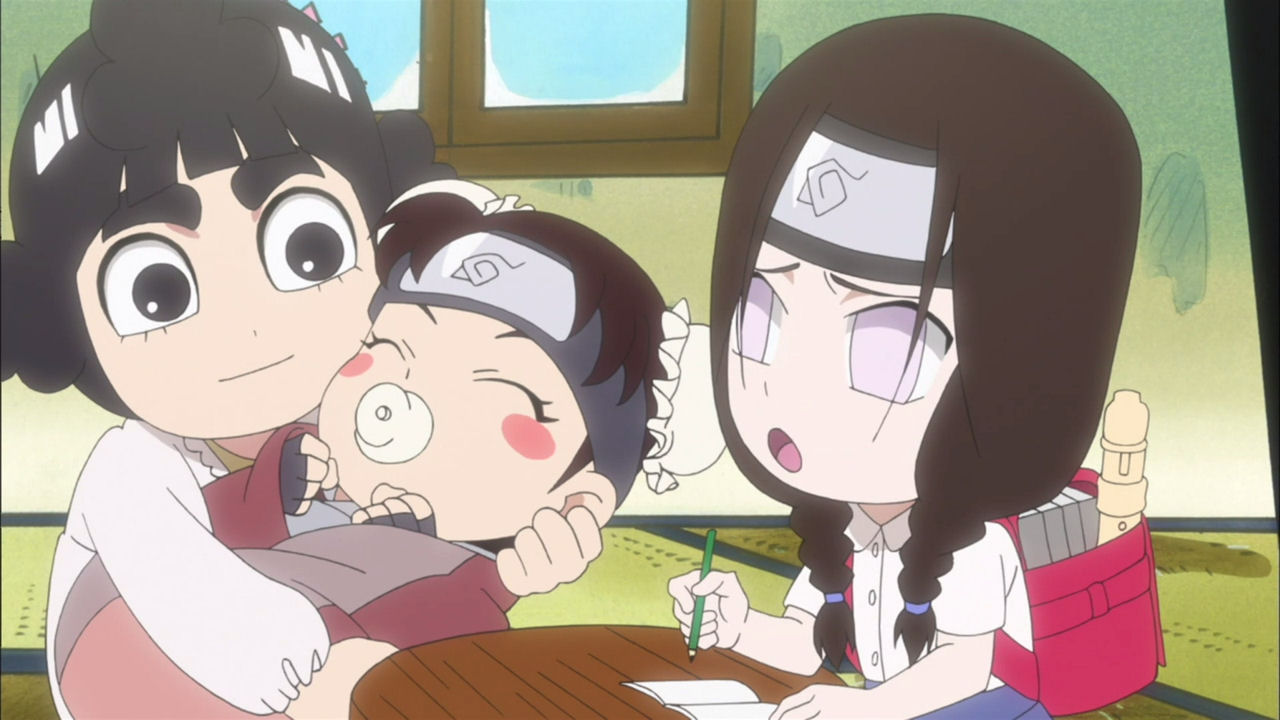
ロック・リーの青春フルパワー忍伝/Rock Lee no Seishun Full-power Ninden/Rock Lee’s Springtime of Youth Full-Power Ninja Training
Sunday, 11 March 2012
Bleach movie 1: Memories of Nobody

Not too long ago, it was announced that the Bleach anime is imminently coming to its close, at an awkward point not long after its timeskip. The last TV episode will air at the end of this month, with its replacement – perhaps rather gallingly – apparently being the Rock Lee SD spinoff that’s recently been making for a far more entertaining manga than its parent title.
It seems like a good time, and nothing stops OVAs and movies carrying on the story. Plus the fourth film, The Hell Verse, was for me something of an apogee for the animated version, which will leave me with fond memories of this derided Shounen Jump piece. I have to say, though, when Bleach really had everything going for it, it rather squandered its chance.
This, the first film, came out in
For the first theatrical venture of a big anime title, this is not a terrible effort, but it falls well short of being anything special, and the slightly above-average visuals can’t make up for a seen-it-all-before plotline.
Saturday, 11 February 2012
Bleach Movie 3: Fade to Black 君の名を呼ぶ / Fade to Black Kimi no Na-o Yobu / Fade to Black, I Call Your Name

This, the third Bleach movie, satisfied me in a typical Jump movie sort of way, though not nearly as much as its sequel Hell Verse did. After watching on 14.10.09, after the DVD release was subtitled by fans, I wrote ‘After disappointing One Piece and Naruto movies, I was very pleased to see a big Jump franchise movie doing it right. Nice eye candy, an emotional, sincere side-story that worked in the world of the show and the sheer awesomeness of Zaraki Kenpachi at work. Nice!’ Apparently it just got an official release in the
And yes indeed, while of the Big Three, Bleach has most outstayed its welcome now, and probably been abandoned by even more of its fans than Naruto, two things I can really say for it are that it manages to produce the best movies and the best filler arcs. Not really the greatest accomplishments, but it’s at least something – and not really competing with One Piece isn’t exactly something to be ashamed of. Bleach’s first movie was rather dull, but this one at least entertained.
This feature-length version revolves around the pretty obvious side-story concept of everyone but the main character losing their memories and no longer being familiar with him. Naturally in a world where combat is part of daily life, this unfolds rather differently from, say, The Disappearance of Suzumiya Haruhi. It’s up to Ichigo to get to the bottom of what happened and get his allies back on his side, as well as dealing with a mysterious ‘dark’ version of a familiar face.
After The Hell Verse it all seems a bit unambitious and uninteresting, but for the eye-candy and a simple, workable story with characters that after all this I still do quite like, it’s worthwhile as a companion piece.
Friday, 23 December 2011
Naruto movie 3: 大興奮!みかづき島のアニマル騒動だってばよ! / Dai Kōfun! Mikazuki-jima no Animaru Panikku Dattebayo!/ Great Excitement!Animal Panic of Crescent Moon Island
English title: Guardians of the Crescent Moon KingdomMuch like the previous two films in the Naruto series, this one sets up a promising premise, adds very nice animation and well-integrated CG to what is already one of Naruto’s greatest strengths - character design – and then soon grinds down into very formulaic, cheesy silliness. The spoilt-younger-kid-gets-taught-valuable-life-lessons-by-the-protagonist basis so popular in Naruto and One Piece is not a bad template, but it needs a strong overall plot to compliment it.
Team 7 (with Rock Lee replacing Sasuke) are on a mission to escort a fat prince reminiscent of Kurata from Hikaru no Go back to his hometown – though not before stopping to buy an entire circus. The prince’s son Hikaru is also in the retinue, his design (as well as that of a very senbon-zakura-like attack later) lifted more or less directly from Bleach – he could easily be a younger Quincy. Naruto clashes with the boy, of course, until our young protagonist finally loses his tempter, hits the boy and gives him a lecture – actually getting surprisingly abusive. Young Hikaru is stung enough that he is moved to prove his mettle during a storm – he goes to rescue his favourite animals. Of course, most people would consider an 8-year-old (or thereabouts) going out onto the deck of a boat is listing so badly that he could be thrown overboard at any moment and letting tigers out of cages incredibly stupid, but it wins the respect of Naruto and co. Far worse, it also makes Chamu the Siberian Tiger (in a world with no Siberia – or indeed Amur) and Kiki the monkey become friendly and seemingly fluent in human speech. The prince gets home to find there has been a coup, so of course lots of one-on-one ninja battles ensue, accompanied by long speeches and kids proving themselves both brave and capable in the usual manner.
Not as good as either of the last movies, thanks to the added cringe-factor of circuses and animals, but with some nice scenes early on and some great bits of animation, it was worth seeing, and certainly much better than the filler in the series. You didn’t really need any knowledge of the Naruto universe to understand what was going on, so it stood alone well. It just seems a shame that it’s been a while since I’ve expected anything Naruto-related to do anything but play it very safe, in terms of plot, obvious distinction between good guys and bad guys and acceptable modes of minor-character deaths.
There’s something interesting, though, about how compelling it is for young fans of the show to see their hero, though his self-cloning techniques, get killed again and again and again before he finally prevails…
(expanded from impressions, 3.5.07)
Wednesday, 16 November 2011
テガミバチ REVERSE / Tegami Bachi REVERSE (+Gakuen)
Tegami Bachi REVERSE picked up right where the first series left off – adorable little ‘Letter Bee’ Lag Seeing finally found Gauche, the man he had a huge hero-worship boycrush on since first meeting him, only for Gauche to be nothing at all like anyone remembered him being, calling himself Noir and working for a sinister underground organisation.The original series had a very silly premise which I loved because it was done very seriously. Here, everything is far sillier, yet still works for the same reasons – sincere delivery and world-building that suits exaggeration. In the original series, the postmen went on exciting quests, destroyed giant insectoid monsters and changed lives. Here, Lag meets what is essentially a god, gets involved in plots to essentially destroy mankind and faces the philosophical conundrums of whether a person who has forgotten their past is still the same person. And because the world is crazy and because Lag is such an adorable little wimp – and yet so very powerful – it all works. I don’t mind if the ideas about an artificial sun wiping minds, Lag not being quite human and vague ideas of research to discover lost ‘hearts’ are left vague – what does it matter in a world where what passes for superheroes are postal workers and giant beetles with tentacles burst from the ground?
Lag and Niche remain at the centre of everything, even if they don’t always understand what they’re in for. I’m surprised these two characters work as well as they do – Lag is a total wet blanket and Niche, despite some angsty episodes, never really grows or gets smarter. Personally, I’m a sucker for the cute young boys who are totally hapless and cry a lot but have deep inner strength, but I also appreciate there are a whole lot of people who find that character type very annoying. Yet Lag not only carries the whole story, but is a large part of why I care about this silly plot, full of nonsensical magic and the plans of an evil organisation that at first seems so huge and formidable but ultimately boils down to three or four blokes and some vague ideas about cleansing the world.
Tegami Bachi REVERSE is no cleverer than its predecessor, but has the same strengths. The visuals improved very slightly, the ‘gaichuu’ a bit less jarring, though still very obvious CG, and less lazy animation of action scenes, but that might just have been the particular Pierrot team working on certain episodes. The music is nice, and it was interesting to hear an ending song by Nico Douga singer Piko (in female mode) – who is now a Vocaloid and whose version of ‘Magnet’ with Sekihan I found quite stunning when I heard it a few months ago (both guys doing both male and female voices).
Tegami Bachi was always something fun, silly but also emotionally dynamic to watch without having to concentrate very hard. I was watching it as each episode was released until one episode was broadcast with huge (totally understandable) tsunami warnings all over it when those sad events unfolded, and waited a few months for a clean version. But I’ve now polished off the lot – and would recommend the show to any fans of shounen on the slightly sillier, cuter side.
Tegami Bachi Gakuen / Letter Bee Academy
My first thought when I put on the Gakuen shorts was ‘why on Earth is this narrated by Majo Rika?’ The obvious answer is that her voice actor is also on the Tegami Bachi cast, but I had no recollection of hearing her – until I looked up her seiyuu and found she played the silly joke creature Steak. That makes perfect sense!
Anyway, these little omake are just silly little 3-minute SD gag animations based around the idea that Lag, Zazie, Connor and Gauche are students in a Letter Bee school, with the enigmatic Doctor Thunderland as their teacher and usually the butt of their antics. It’s all cute, silly and frivolous and I mention it mostly because of the Ojamajo Doremi link!
Thursday, 27 October 2011
Bleach: Pre-timeskip
I’ve done it for the other two Shounen Jump ‘Big Three’ titles, so now that the anime has come out of its latest extended filler arc and skipped ahead a year and a half to one of its most unpopular arcs, it’s time to give Bleach the same treatment.It’s interesting to note that I didn’t get into any of the Big Three on a first attempt. One Piece’s Alvida episode seemed frivolous and unfunny and Naruto seemed like its main character was going to be too hard to like, let alone root for. But by the Haku/Zabuza arc, Naruto was a firm favourite and One Piece hooked me in as soon as Zoro was set free – though took another few months to rise up to my favourite Jump title besides Hikaru no Go. Bleach, on the other hand, was a long, long slog before it picked up and became not only watchable but compulsive viewing.
But – unlike the authors of The Anime Encyclopaedia, whose entry is clearly based on a cursory viewing of the first few episodes – I stuck with it, curious as to what all the fuss was about, and I ended up glad I did. For while the first forty or so episodes are rather dull and emotionally distant, once Ichigo travels to Soul Society and its major figures are introduced, a far more interesting world, with far more interesting characters, comes to the fore.
Bleach is about a teenager who can see ghosts. He has a reputation as something of a delinquent, especially because people jump to conclusions based on his hair colour – which supposedly is natural and not a result of bleach. This was for some time put forward as a wrangled reason for the series’ title, until mangaka Tite Kubo came up with a better one about wanting to refer obliquely to white. One day, he sees a female shinigami in battle with a ‘hollow’, a monstrous and predatory spirit looking to feed on the souls of the recently deceased. The shinigami, Rukia, ends up injured, and lends Ichigo some of her power to defeat the creature. However, he absorbs far more than expected, not only becoming powerful enough to defeat the hollow but rendering Rukia almost useless for a while. Thus, he has to take on her responsibilities and do battle with the creatures from the spirit world, who seem to have taken an interest in him and those around him.
As I mentioned, the story doesn’t really pick up until Ichigo travels to the Shinigami world of Soul Society to rescue Rukia, which means taking on warriors far more powerful and more experienced than he is – and becomes mixed up in a coup that just happens to erupt as he is there. This section has some irritating power-up moments for Ichigo, but introduces the shinigami captains, antagonists who later become sympathetic and even the best things about the series in a similar way to HunterXHunter’s genei ryodan. My favourite is the straightforward battle-freak Kenpachi, but the likes of the aloof Byakuya, the gruffly childlike Toushirou and the unhinged mad scientist character Kurotsuchi have great designs and dynamics.
Bleach was also quite innovative with its filler, original episodes not based on the manga aired in order to prevent anime catching up to Jump chapters. Initially, Studio Pierrot fell back on their Naruto filler tricks with inconsequential single episodes – including one about a ghost baker shamelessly ripped off from Kekkaishi – but later began to do long, extended story arcs, even introducing characters that come back for cameos in later non-filler episodes. These usually outstay their welcome and fall apart even if their original ideas were remarkably good, but they generally offer far more to keep an audience than long seasons of bitty, inconsequential single-episode stories.
In the end, Bleach is in a state of uncertainty. Many seem to think it would have been the ideal time for Bleach to end when the time-skip happened, and everything beyond that has been sub-par. And even before its timeskip, I wouldn’t call Bleach the best series. It’s often frustrating, its central character is remarkably uncharismatic for a Jump protagonist and there’s often an air of desperation about how its loose ends get tied up. But there are some battles here that ought to be a fix for any lover of shounen, and really, if you’re watching a long-runner from Jump, that oughtta be what you’re looking for.
Movies
Monday, 10 October 2011
美鳥の日々/ Midori no Hibi / Midori’s Days / Midori Days
I was still fairly new to weekly anime and the fansubbing scene when I watched Midori no Hibi, back in 2004. Fresh from Azumanga Daioh and Excel Saga, I thought that in the grand scheme of things, the concept of Midori no Hibi wasn’t all that weird. But it is. I was in a little bubble of surreal anime, and I’m not sure anything has had such a weird basis since. Even OreTama has a more coherent thought pattern behind it. Midori no Hibi is truly weird, and only weirder because once it slaps you across the face with its premise, tries to be a very normal odd-couple drama. But the lead girl has magically replaced the lead guy’s hand, and lives there, attached to the stump of his arm.
Yes, Midori no Hibi is a zany romantic comedy about what happens when you wake up with a cute girl instead of a right hand. Sweet-hearted little Kasugano Midori has long admired delinquent Sawamura Seiji from afar – he has a reputation as a mean fighter and bad company, but she knows most of his fights are to protect the weak, and generally he’s very much like Ichigo from Bleach, down to the hairstyle. After a mix-up with wishes coming true and Seiji thinking that his reputation will mean he will only ever have his right hand for a girlfriend, the two are brought together indelibly.
Midori no Hibi has some of the most bizarre fanservice you could imagine, and is a truly surreal romance, but somehow it powers though with such self-belief and conviction hat it manages to cohere. The result is something certainly unique but also familiar and very funny.
I remember the series being popular at the time mostly through the highly influential Snoopycool scanslation group, and though the manga had several new characters and a slightly more adult tone to it, the only things that the anime missed out on by leaving out the crazy American girl or the strange yankee girl who obsesses over the adorable shy boy who Seiji always ends up rescuing was a few laughs, and those are easily accessible through the manga anyway. Ultimately, the anime feels more like a tool for getting people to pick up the manga, but in and of itself it’s a fun, silly, satisfying story with a surprisingly good romance story and the ability to take its absurd premise to serious places beyond wacky comedy.
And somehow, there’s something hilarious and adorable about how poor little Kouta has to suffer so much.
Thursday, 6 October 2011
ヒカルの碁/ Hikaru no Go
I find it more or less impossible to answer when someone asks me my favourite anime. There is too much diversity, I think. Too many great series and too much variety – how can you weigh Azumanga Daioh against Paranoia Agent or Spirited Away? And then I feel inconsistent, because I know full well what my favourite manga is, despite there being even more titles and even broader degrees of variation and experimentation. My favourite manga is Hikaru no Go.My feelings for the series are simply too far in advance of those inspired by any other. Since the final chapter in 2003, I’ve periodically revisited my favourite volumes, and they still always have me hooked. The characters, the realism, the setting, the drama, and in particular the art – all are the very best of the shounen manga world. And while Obata’s art improved vastly during his run on this series, it was at its pinnacle by the end, and visually I prefer the balance he finds here to the shadowy look of Death Note or the stylisation of Bakuman.
Nothing else has ever excited, moved, tickled and warmed me quite so much.
But even if the manga is my favourite of all time, the anime is not quite up there. Another of Studio Pierrot’s Jump series (along with Naruto and Bleach), it ran for a respectable 75 episodes (plus a special), had superb voice acting and music, and didn’t look half bad, even if it could never quite match the lovely visuals of the manga. Yet…there was some spark missing. The timing of scenes often seemed off, or slightly off-model faces seemed to ruin scenes. The final arc never got animated, and as the ending disappointed so many, I don’t expect a HunterXHunter-style revival any time soon (though a year ago, I didn’t expect that one, either, so who knows?). But I would be so happy to see one, and it saddens me when it feels like Hikago is forgotten.
The story is simple: a normal, slightly rebellious young boy finds an old board for playing the complex traditional game go, or igo. Hearing strange voices, he passes out, and when he awakes, he is haunted by a ghost from the heian era called Sai. All Sai wants is to play go, and to see others play, although he does have a childlike wonder for the marvels of the modern world, like a TV screen showing footage of fish. Hikaru upsets a lot of people by letting Sai play through him, especially when he beats the passionate young Akira, a prodigy destined to be amongst the best in the go world – sparking something of an obsession. Before long, Hikaru develops a desire to excel on his own, not through another.
Those who don’t give it a chance miss out on a lot. I love how go is the perfect sports manga subject – physical sports too often require farcical superhuman talent (see Prince of Tennis) or are very raucous and manly (ie Slam Dunk), but go has a stately seriousness that makes it perfect for a realistic manga – and what’s clever is that Sai is the sole supernatural element of the series. I love how just about every minor character gets fleshed out. I love the fact that Hikaru wears such fashionable clothes while Akira has the most horrible dress sense. I love the way you can see the artist and writer evolve over the course of the series, and how a goofy little idea about a ghost and a board game becomes so serious and so moving. It’s just such a perfect scenario, such a great way to meld reality and fantasy, such a neat way to make fantastic drama right from the beginning.
Hikaru is just an everyman, albeit a very likeable one. It’s Touya’s passion and shattered confidence that drives the story from beginning to end. It’s the same heated rivalry and affection that drives Naruto and Kingdom Hearts, but female mangaka Hotta Yumi does it far better, and with far more believable, human, relatable reasons for the rifts that lead to drama. How strange that the best teen relationship drama I’ve ever read is between two boys in a Jump series – and while it’s easy to jump to conclusions, any shounen-ai undertones are actually kept as undertones.
Hikaru no Go was a perfect balance of humour, drama, triumph and angst. I’ll always recommend the manga first, but the series is very much worth watching, and contains some of my favourite characters and twists of any anime.
(With elements originally blogged 12.4.06, 9.11.06 and 23.4.08)
Wednesday, 5 October 2011
BLEACH 地獄篇 / BLEACH Jigoku-Hen / Bleach Movie 4: The Hell Verse
This, really, is how one of the tie-in movies for the big Shounen Jump series should be. After a slew of disappointing efforts, I was pleased to find this feature-length side-story compelling, unorthodox and visually stunning. The crucial difference is that the mangaka Tite Kubo was involved in the creative process. Normally, these films are overlong filler episodes, in which nothing of any consequence can ever happen in case it ends up getting in the way of something the original creator has planned for a future story arc. It’s only a shame that until now, it doesn’t seem like anyone thought of actually getting them in to discuss possibilities – or perhaps only now has it become practical.
The film starts with a recap of Ichigo’s battle with Ulquiorra, ostensibly to remind the audience of the uncontrollable power of our protagonist’s full-hollow mode, but in truth, probably more so that the animators can have fun with some very flashy animation. The plot that follows is simple and neat, another positive for this sort of tie-in: some powerful enemies have escaped from the Gates of Hell, and kidnap Ichigo’s little sister Yuzu. Ichigo, along with Rukia, Renji and Ishida, must follow them into Hell to rescue her – but the new ally who guides them through the strange world of the dead, where tortured souls die and die again until their spirits are crushed, may not be all that he seems.
Three things make this film work better than most Jump movies: firstly, the impression that Ichigo actually grows and learns something from this experience: he is dealt one of the most heavy emotional blows of any Bleach story, he battles against the berserk, uncontrollable part of himself and he gets a power-up that it makes perfect sense for us never to see again in the main series. Secondly, the fact that we learn more about a facet of the Bleach universe that we glimpsed but was largely mysterious: we see how things work beyond the impressive Gates of Hell. Thirdly, what I always look forward to in movie versions – the same basic composition of the series but with much more impressive visuals – actually exceeded my expectations here. The animators were having a great time playing with scale here, with absurd explosions and lumbering enemies hundreds of feet tall. A lot of the framing techniques here accentuate the sheer size of things when juxtaposed with the characters, and with nice fluid animation it all works extremely well.
There’s some contrivance in the ending – it relies on some sort of unseen conscious power running Hell making the right decisions for good to prevail and evil to be punished – but it works because, after all, it’s a fantasy world. There also aren’t too many of the wider Soul Society cast to see here, with only a handful of captains showing up for a line or two each, so some fans may miss their favourites. But for a satisfying story that actually feels significant and not throwaway, with great eye-candy and a good, solid story, this is probably the best Pierrot can offer. But Bleach always did have superior filler.
Saturday, 16 July 2011
Les Mystérieuses Cités d'or /太陽の子エステバン / Taiyou no Ko Esteban / The Mysterious Cities of Gold
Here is a series with a very interesting production story: what I watched was the Canadian dub, commissioned by British and American companies, of a Franco-Japanese coproduction with finance from Luxembourg written primarily by a Frenchman based loosely on an American novel about Spaniards in the New World, with an enduringly popular theme song written by a very talented Israeli musician living and working in France. The scripts were written by the French but storyboarded, it seems, mostly in Japan, under a French director who had moved there. So debate has long raged about whether or not this is anime. Well, I’d say no, on the grounds that Thundercats is not regarded as anime – after all, that was entirely animated in Japan, but the creative team were Western. The only difference is that Mysterious Cities of Gold was first released in Japan, with Japanese voice acting, as Taiyou no Ko Esuteban – or Esteban, Child of the Sun. But the project’s origins are Western. The series was a collaboration between DiC, a French company whose name was ubiquitous in 80s cartoons and made me and my brother giggle even back then, and Studio Pierrot, now probably most well-known for churning out Naruto and Bleach but back then a fledgling studio with only three productions under their belt (though including the notable smash hit Urusei Yatsura). It was developed and produced in 1981, first ran in Japan in 1982, then the slightly edited French version was aired in 1983. The English version was not aired until 1986, in both the US and the UK. My own memories of the first run, or the repeat in 1989, are limited, and certainly I don’t have the fond childhood memories of it that I have for Ulysses 31 or M.A.S.K., but that theme tune is embedded in my psyche, as well as the image of the Golden Condor in flight.
In 16th-century Barcelona, little Esteban is treated as something of a miracle child, able to call out the sun, though he doesn’t believe it is magic of any sort himself. Because of a medallion he has worn since his rescue from a shipwreck as a baby, he is drawn into a voyage to search for the Mysterious Cities of Gold. Along the way he meets Zia, a little Incan girl with a medallion of her own and the ability to read ancient scripts, and eccentric Tao, the last of the Hiva people.
The first half of the series centres on interesting struggles between different political factions in the time of conquistadors, and remains remarkably sophisticated in terms of historical detail right up until the kids stumble upon ancient technology. The crumbling temples and even the incredible solar-powered flying machine the Golden Condor all work well, but as the series goes on, it goes a little too far with its fanciful science fiction, and many of the final episodes are given over to the Olmecs, an unconvincing group of pointy-eared goblin people with advanced technology and bioengineering skills. It just goes a little too far and they look too silly, with the result that everything gets a little trivialised. I would have much rather had closer ties to reality, because the same story could have been told without the daft sci-fi excesses.
Because the first half is brilliant. The characters are very interesting – the kind-hearted and innocent children are contrasted with the adults, be they greedy and oafish like Sandro and Pedro, or morally ambiguous like Mendoza, that detail according to the creators added by the Japanese. He has to be one of the most interesting and compelling supporting characters in any animation, by turns noble and conniving, always with an agenda of his own, even if it is simply to keep the children safe.
I made a point of tracking down at least the French and Japanese versions to compare with the English dub that coloured my childhood and so I stuck with. The French is on the commercial DVDs but the Japanese is remarkably hard to find. The English dub was actually meticulously and carefully done – the DVD extras reveal a laborious process of matching plosives and fricatives, and getting strong performances out of inexperienced children. The main problem with the English dub is how often it is an info-dump, with far too much dialogue crammed into too little time, resulting in the actors garbling out long lines in a very unnatural way. There is none of this in the Japanese version – the adults in particular are much stronger, giving measured and even performances, but the children’s voices are bad…Esteban sounds cocksure and is clearly an adult woman, and Zia’s whiny voice is like nails on a blackboard. And I just can’t get over Sandro and Pedro calling Mendoza ‘Aniki’! The theme song, with its English refrain of ‘Try my best!’ is also nothing to the adapted version’s, and twee in a very different, less impressive way – though it’s a shame some of the animation got hacked out for the Western release. The French dub preceded the English, and has kids performing the main roles as well, and Sancho sounds so much like his English counterpart I actually looked up the actors to see if they were the same person in both roles (not so), but there’s much less variety in the voices, Mendoza’s voice is a little too brazen for my tastes and there’s the same problem with rushing and incidental characters overacting. I’d put it on a par with the English version – though I must say I prefer the intro having a refrain of ‘Someday we will find the Cities of Gold’ to the rather awkward and silly ‘Esteban, Zia, Tao – Les Cités d’Or’.
As a major cult hit, lots of material has been made recently available for fans, including DVDs with several documentaries, dominated by the animation director who also played Mendoza (with the somewhat suspect story of being picked from four anonymous candidates by French producers to play the role after simply recording himself to fill an empty slot – not that I mind too much as he does an excellent job). The main thrust of these is that those who took part in the production are astonished how well the title has endured. And there is always talk of a revival – in 2007 it was feature films, and now it’s three new 26-episode seasons to premiere in 2012. Having ambition and quality in animation makes it last, and though it was cheaply animated and looks dated now, the story and characters have stayed with the audience, and I for one cannot wait to see the updated version.
Wednesday, 6 July 2011
劇場版 NARUTO-ナルト-疾風伝 ザ・ロストタワー / Naruto Shippuden Movie 4: The Lost Tower
After the disappointing Bonds and the downright terrible Inheritors of the Will of Fire, I was uncertain that it was ever again going to be worth watching a Naruto feature film. They’ve never been good pieces of animated storytelling, the worst kind of cash-in to milk a popular franchise, but they were at one stage fun, being silly, straightforward stories that usually gave a chance to see the characters with superior art and animation. Lately the films have lacked even that much. So I’m quite happy that The Lost Tower was a return to form, however much that may sound like damning with faint praise. It was not high art, or daring or a highlight for the few fans who are sticking with Naruto to the bitter end through dogged loyalty to the manga and original series, but it was entertaining, solid and had a few great ideas.
Naruto and the new Team 7 – that is, with Yamato and Sai – are tracking a rogue ninja to the ruins of a city that was once great, but only a couple of decades earlier had fallen to ruin. Their target, however, is in the midst of a plan to travel back to the glory days of the metropolis and make use of a great power source. Of course, Naruto gets pulled into the time vortex that is created and finds himself in the city twenty years before. The rogue ninja, Mukade, was sent back several years earlier than this, and has by now established himself as the political leader of the city, using the vulnerable young princess as a puppet. Naruto foils an assassination attempt on her life, and so gets pulled into the intrigues Mukade has set up, as well as finding himself in the company of other Konoha ninja from the past.
The story unfolds with a simplicity beyond even most Shounen Jump movies: before the halfway point, the major battle with the antagonist has begun and the exact aims of the characters are established. This leaves a lot of room for the rest of the film to be thrilling battles, rescues and inspirational speeches – the bread and butter of this sort of anime. While maybe a little more sophistication would not have gone amiss, there is much to be said for the direct option, and it works nicely.
And once again it looks great. Pierrot are capable of producing high-quality stuff when they work hard: let us not forget that their KumoKaze is often mistaken for a Ghibli production, and not just for the character design. This isn’t stunningly beautiful, but it certainly stands above the other recent Naruto films and the state of the weekly anime. There is some superb fluid animation here, in speech as much as in the action, the CG is nicely integrated and there are actually nice attempts at introducing Dutch angles and other less conventional mise-en-scene techniques to make the visuals interesting.
And dubious though I was at the start, the idea of going back in time twenty years provides some great moments. I loved that for some reason, Minato’s teammates on this mission were Chouji’s dad Chouza and Shino’s dad Shibi, as well as mini-Kakashi. It was great seeing them in action. The idea of having Naruto and Minato interacting provided some problems for continuity and some contrivance to work, but it turns out to be just about worth it, and while the inevitable closing scenes where the events get squeezed out of the canon continuity are a necessary evil but still grate somewhat.
But these are the pitfalls of making a Naruto film. And as they go, this one isn’t bad at all.
Friday, 24 June 2011
テガミバチ / Tegami Bachi / Letter Bee (season 1)
Tegami Bachi, originally a manga from Jump Square (which replaced Monthly Shounen Jump), is an unlikely hit, revolving as it does around postal workers. But these are postal workers in a magical, dangerous world of giant part-mechanical monsters and guns that can shoot fragments of the soul, so delivering letters becomes a challenging business. And besides, strange premises never held back good manga – just look at Hikaru no Go or Yakitate!! Japan.The story begins with a little crybaby of a boy called Lag Seeing being treated as a parcel. His deliveryman, Gauche Suede, impresses him by his absolute devotion and his formidable strength, so the rest of Lag’s life is devoted to becoming a postman – or ‘letter bee’ – himself, complete with the power to kill giant insect ‘gaichuu’. Postman Pat this ain’t.
Lag becomes a bee, helped by a mysterious feral little girl called Niche ('Nitchi', not the English word) who was effectively a lost letter, and works diligently – but Gauche has vanished. His history is surrounded in mystery, and his own sister does not know where he has gone, though longs to see him. Lag pieces together clues he finds in between the other mysteries he encounters, but finding what he searches for only opens up a whole new mystery – and a cliffhanger for the season.
Tegami Bachi works because its ridiculous premise is taken seriously, and because Lag and Niche are not only adorable but a hilarious comic duo. Lag is a total crybaby, but headstrong and determined, while Niche is tough but utterly clueless. Where he is always polite, she has no idea of social norms. Where he is diffident, she has no fear of speaking her mind. And her devotion to him becomes both very sweet and at times quite funny.
A second season, Tegami Bachi Reverse, continues in much the same style, and of course the manga goes on too. Tegami Bachi is too daft and action-oriented to make a huge impact or be taken seriously, but it is always fun to watch. It looks nice, Studio Pierrot evidently making a lot more effort with this than with Naruto Shippuden, and the voice acting is one of the series’ strongest points. Not a must-watch, but certainly a small favourite and something to relax with.
Saturday, 18 June 2011
Naruto Movie 2: 大激突!幻の地底遺跡だってばよ / Daigekitotsu! Maboroshi no Chiteiiseki dattebayo / Great Clash! Illusionary Ruins at the Depths of the Earth ...
...dattebayo. Or to give it the official English title, Legend of the Stone of Gelel.It must be said that with the regular series rapidly losing fans thanks to terribly-written filler episodes, the manga limping along with a predictable and clunky plot and big reveals that are milked way to much to provide anything but bathos, and the games fun to play but hung on repetitive and somewhat silly plots, Naruto is long past its heyday. However, this movie reminded me just how good the characters are, and just how gripping their world can be. It was almost a good movie. Almost.
Firstly, the movie is beautiful. Animation has priority over keeping the art totally on-model, but it works well, because the characters move with such fluidity and the art is still of a high enough quality that it looks fantastic. The background work in particular is superb, though some CG backdrops were a little jarring. Naruto as a series began with extremely beautiful animation in its first main arc, became a bit hit-and-miss thereafter (from the highs of the Lee-Gaara fight, still two of the most impressive episodes of any anime I’ve seen, to the lows of the Naruto-Kiba fight) and currently suffers from some of the cheapest and most basic animation since Pokémon. But the animation here was superb, recalling at times Miyazaki films (the little slice-of-life cuts in the gypsy camp; trees growing at an incredible rate), at times Akira (Kankuro’s face in the shadows; the way Gaara’s sand moved), and showed just how good the characters can look when animated properly. I assure you, that is very good indeed!
Kudos to the writers for creating something that serves both Naruto newbies, who would find little confusing (except a little Sasuke cameo and perhaps the lack of exposition for Gaara and Kankuro), and also hardcore fans. The scenario wasn’t written by Kishimoto (the manga's creator), but it’s clear that the scriptwriters knew their stuff, from accurate characterisation and catchphrases and good portrayals of characters’ fighting styles to typical plot tropes. There was even good use of genjutsu, which it sometimes feels like Kishimoto himself has abandoned or forgotten (Itachi’s special form of it aside). The only questionable part is that there are people in the fictional world who haven’t heard of Chakra or ninjutsu. This seems unlikely within Kishimoto’s universe, though it’s not impossible.
But the crux is the story. And it starts so well! Naruto, Sakura and Shikamaru’s simple mission becomes diverted when they are attacked (for reasons never fully explained) by a mysterious knight. Nice to see some varied cultures. The young knight is following a man who is promising to build a utopia where all are safe from war. But at what cost?
Very typical anime stuff, but well done. Surprisingly, what lets this movie down is the fights, especially troublesome since the big plot McGuffin means that 90% of the movie’s latter half is fighting. It’s not the animation – there’s little to fault in the opening scene, for example – but the writing. First, there are some daft One Piece moments (‘Your sand can’t compete with my lightning!’), except the film doesn’t have the tongue-in-cheek charm of that series to carry it off. But what’s really hard to take is the fact that the bad guys keep mutating into really stupid-looking mutant creatures. It just does not work. It takes the whole thing down a level and makes it laughable. If not for this major flaw, the contrived plot, cheesy ending and paper-thin big bad guy would have been palatable. But the monsters push this one step too far; it becomes irretrievably ridiculous. Shame – the first half really was exemplary.
(originally written 23.5.06)